Blog

  • Signs of a Healthy Relationship: What Actually Matters (10 Signs)

    Signs of a Healthy Relationship: What Actually Matters (10 Signs)

    We all know the red flags: jealousy, control, contempt. But when someone asks “is my relationship actually healthy?”, the answer is usually a shrug. It’s easier to name what hurts than what works. This list is here to fix that — to give you words for a healthy relationship before someone asks you why you seem so content.

    Why healthy love is hard to recognize

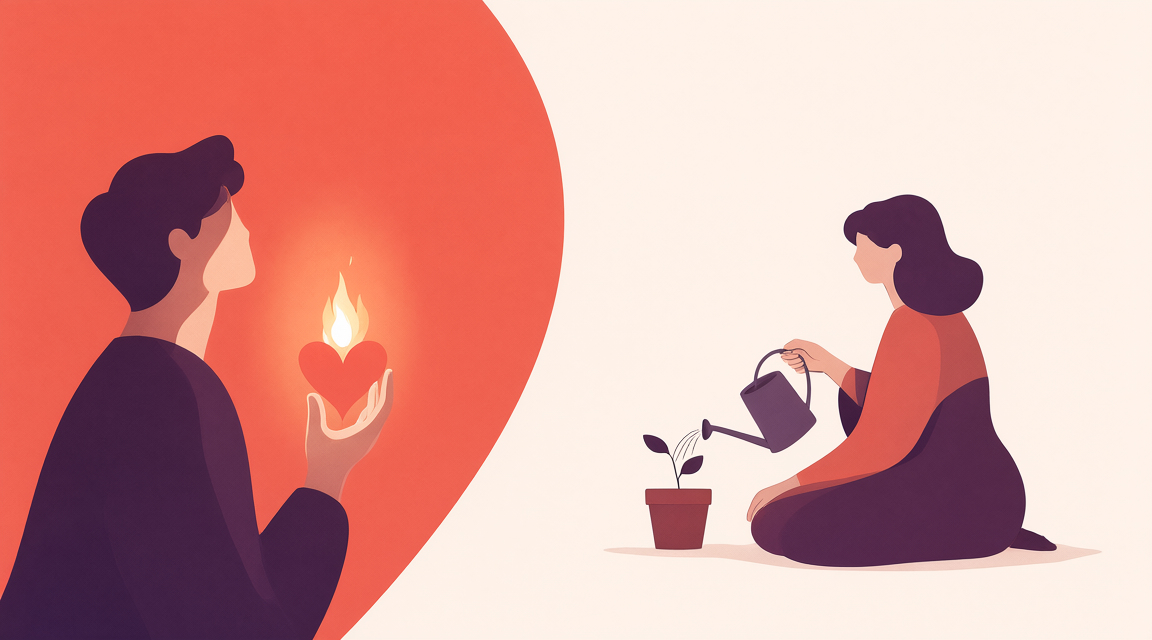
    Quiet love doesn’t make noise. There’s no drama to recount, no rollercoaster to relive over drinks with friends. Because we’ve been sold intensity as proof of love, a lot of people mistake calm for boredom. Spoiler: they’re not the same. A healthy relationship isn’t one without problems — it’s one with a good system for handling them.

    The 10 signs that actually matter

    1. You can be yourself, unedited. You don’t calculate what to say to avoid a reaction, and you’re not performing a polished version of you. If you’ve been “on your best behavior” for months, that’s not love — it’s an audition.

    2. Disagreements don’t destroy. You argue, and the next day the world is still standing. The sign isn’t the absence of conflict; it’s what happens after: someone says “I went too far,” the other accepts it, and you move on. Repair is the real marker.

    3. Your autonomy is celebrated, not surveilled. Your plans with friends, your solo time, your hobbies. A healthy relationship doesn’t ask you to shrink your life to fit inside it — it encourages you to grow, then waits for you there.

    4. It’s safe to ask. Need a hug, help, an apology, more time together? You can ask without humiliating yourself or engineering a three-act scheme so it gets understood without being said.

    5. Money and the future get discussed without panic. The awkward topics most couples dodge for years. The fact that you can name them — even clumsily — is a huge green flag.

    6. Your partner is genuinely glad when you win. No hidden competitiveness, no backhanded praise. Your success isn’t a threat to the relationship; it’s a shared celebration.

    7. Respect holds even when you’re angry. Nobody weaponizes your insecurities. Limits stay in place even if voices rise. Contempt is the single most reliable predictor of breakups — its absence predicts the opposite.

    8. Small gestures flow both ways. Not a scoreboard, but a general sense that you both invest: texts, little errands, “saw this and thought of you.” Love is also shared logistics.

    9. You can set a boundary and it holds. You say “I don’t like this,” and the conversation doesn’t turn into a debate about whether you’re allowed to not like it. The boundary is heard, negotiated if needed, and respected.

    10. After seeing them, you feel better than before. Not every day, not always. But if you take stock of the last month and the emotional balance is positive, that’s a healthy relationship — not a perfect one, a net-positive one.

    The 3-question gut check

    If memorizing a list isn’t your thing, ask yourself:

    1. Do I feel safe saying what I think?
    2. Am I more myself than before this person?
    3. When something goes wrong, do we fix it or avoid each other?

    Three honest “yes” answers are worth more than any checklist. One persistent “no” isn’t a death sentence — it’s useful information about what to talk about.

    What is NOT a sign of anything

    Fighting rarely doesn’t guarantee anything (it can be avoidance). Texting every hour doesn’t either (it can be anxiety). The reliable signs aren’t contact volume or friction-free days — they’re the quality of your repairs: how you treat each other when things go sideways.

    Bottom line

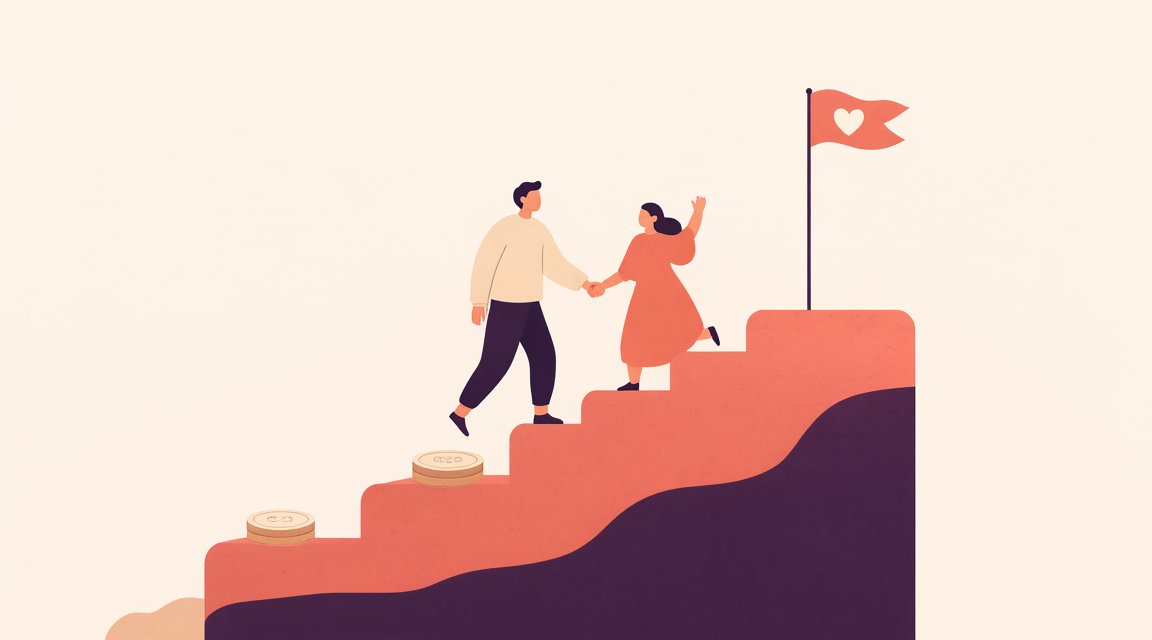
    If you read this list thinking “huh, that’s my relationship” — congratulations, you have something a lot of people chase without being able to describe it. And if you spotted empty boxes, that’s fine too: healthy relationships aren’t found fully built. They’re constructed. One honest conversation is good building material.


  • How to Communicate Better with Your Partner: A Practical Guide (No Therapy-Speak)

    How to Communicate Better with Your Partner: A Practical Guide (No Therapy-Speak)

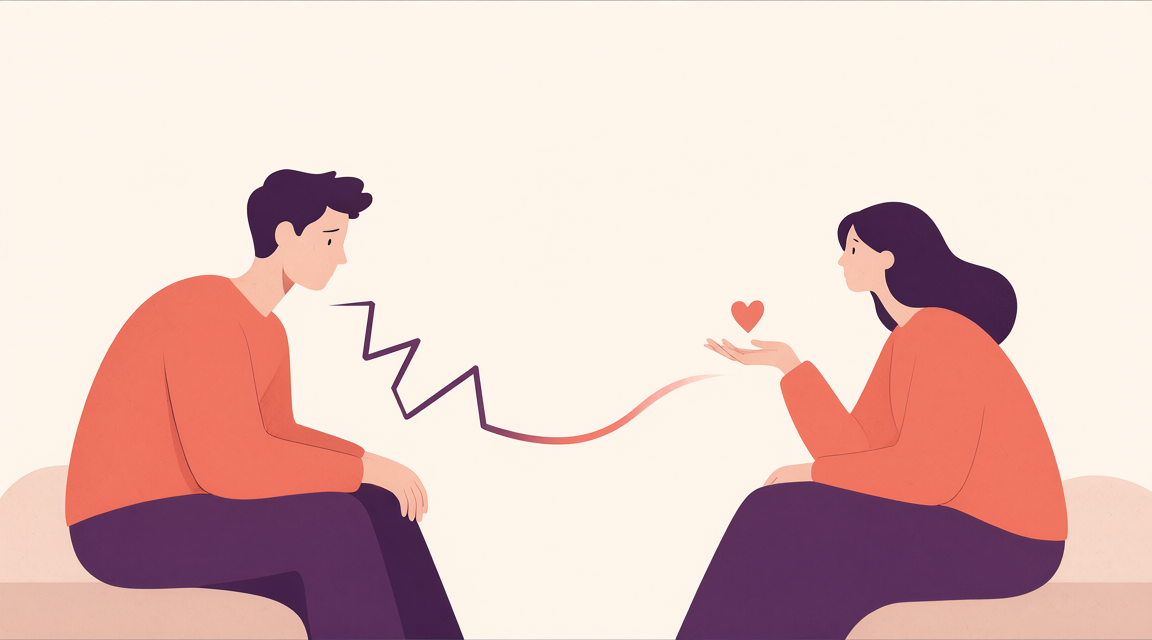
    “Any therapist would tell you it’s all about communication.” Great — everyone knows couples should communicate better; almost nobody knows how. Communicating well isn’t a gift some people are born with and others aren’t. It’s a set of concrete, boringly trainable habits. This guide is about exactly that: what to say, when to say it, and what to stop doing starting today.

    First: the mistake that ruins 80% of conversations

    Most couple fights don’t start with the topic being discussed. They start because one person feels unheard or attacked. When that happens, the brain switches goals: you stop looking for a solution and start looking for defense. Hence the absurd escalations about dishwasher loading.

    The practical consequence: before “saying your message well,” make sure the other person feels safe. No technique works if your partner is in trench mode.

    5 tools that actually work

    1. “I” statements instead of “you” statements

    • ❌ “You never listen to me.”
    • ✅ “I feel ignored when you’re on your phone while I’m telling you about my day.”

    The difference isn’t cosmetic: “you” statements sound like accusations and trigger defense; “I” statements describe an effect on you and leave room to respond. Quick formula: I feel [emotion] when [specific situation], and it would help me if [specific request].

    2. Ask for the concrete, not the perfect

    “I need more attention” is unfalsifiable and arguable. “Can we have two screen-free dinners a week?” is acceptable or negotiable. Vagueness is the enemy: it turns reasonable requests into battles about who’s right.

    3. The 20-minute rule

    If the argument escalates (racing heart, raised voices, the urge to say something you’ll regret), pause for at least 20 minutes. This isn’t running away: it’s letting your body come down so the conversation becomes possible again. Agree on the pause together (“I need 20 minutes and I’m coming back, we’ll finish this”) so it doesn’t feel like abandonment.

    4. Listening means repeating, not waiting for your turn

    Before rebutting, summarize what you heard: “So what bothers you is that I booked the trip without checking with you, right?” It feels artificial the first two times. By the third, you’ll be surprised how many fights deflate the moment the other person confirms: “exactly, that’s it.”

    5. The 15-minute weekly check-in

    Once a week, over coffee or a beer, two questions, taking turns:

    • What went well between us this week?
    • What would you have liked to be different?

    No interrupting, no instant problem-solving. It’s preventive maintenance: small issues get discussed while they’re small, instead of piling up to explode big.

    When the problem isn’t technique

    Some situations no magic phrase can fix:

    • One of you has stopped trying: if only one person applies all of this, it’s not a communication problem — it’s a willingness problem.
    • Contempt has moved in: mockery, eye-rolling, insults dressed as jokes. That’s a serious alarm signal, not a style challenge.
    • Old wounds never closed: sometimes what’s being argued today has been under argument for ten years. That’s where a professional helps more than any article.

    Start today (7-day plan)

    1. Days 1-2: catch your “you” statements and translate them into “I” statements.
    2. Day 3: make one concrete request instead of a general one.
    3. Days 4-5: practice summarizing before rebutting.
    4. Day 6: propose the weekly check-in (it works far better when things are going well, not mid-crisis).
    5. Day 7: identify your default pattern (do you shut down? counterattack? give in and seethe?) and tell your partner about it.

    Communicating better isn’t speaking prettily. It’s making it easy for your partner to tell you the truth — and returning the favor.

  • Long-Distance Relationship: How to Keep the Connection Without Burning Out

    Long-Distance Relationship: How to Keep the Connection Without Burning Out

    There’s an idea that haunts every long-distance couple: “distance kills it.” The evidence says otherwise — many serious relationships survive stretches apart and come out clearer about what they want. What does kill things is badly managed distance: drifting without knowing where this is going, silence that gets misread as indifference, video calls that start feeling like a second job.

    This post is about avoiding that drift — no performative self-help, and no pretending it’s easy. It isn’t. But it’s doable.

    Mistake #1: never defining what this is

    Every long-distance relationship needs an answer to one question: is this a phase with an end date, or a way of life? You don’t need a lifetime commitment on day one; you need honesty about the horizon. “We’re doing three months while she finishes her master’s” is managed very differently from “we’ve been like this for a year and nobody will bring it up.”

    The indefiniteness — not the distance — is what exhausts. If you’ve spent months afraid that asking “what are we?” will spook them: that fear is the important data point, not the miles.

    Routines that keep the connection (and which ones kill it)

    What works

    Video calls with an activity, not just faces. Watch a show together with a voice chat running, cook the same recipe in two separate kitchens, play something online. Connection holds better when you’re doing things than when you’re staring at each other trying to converse. The daily “how was your day?” runs dry; “remember when we tried to make paella and the smoke alarm went off” doesn’t.

    An agreed rhythm, not an imposed one. Some couples thrive on daily calls; others on two or three plus scattered messages. The key isn’t frequency — it’s that both of you are comfortable with it. Trouble starts when one person calls “because it’s scheduled” and the other is left waiting for signals.

    Share the small stuff. The meme, the breakfast photo, “I just saw a dog identical to yours.” Long-distance intimacy is built from crumbs of everyday life, not only from the deep 2 a.m. conversations.

    A shared countdown. Knowing when you’ll see each other next — the next visit on the calendar — changes the psychology of waiting. Distance is easier to carry when it has a beginning, middle, and end.

    What doesn’t

    • Surveillance dressed up as affection: 24/7 location sharing, “who were you with?”, demanding replies within five minutes. Jealousy doesn’t increase with distance — it just gets better tools. If you need to control, the problem isn’t the distance.
    • Sermon conversations: saving everything up for the weekly call and unleashing it at once. A daily drip of what matters beats a Sunday emotional mugging.
    • Living only for the relationship: canceling your local life “since we’re apart anyway.” A person with a life of their own is more attractive and, more importantly, shows up to the relationship without resentment.

    Visits: how to get your money’s worth

    1. Don’t fill every hour. The classic mistake: trying to compensate for months in three days of military-grade scheduling. Leave gaps for doing nothing; the best long-distance memories are often a couch and a lazy Sunday.
    2. Mix the special with the ordinary. Nice dinner, yes — but also grocery shopping together. Real relationships include the mundane; if you only ever see each other in postcard mode, the eventual reunion catches you without practice.
    3. End every visit with the next one on the calendar. Not “we’ll see when we can.” Approximate date, tickets booked if there’s room. It’s the best insurance against drift.

    The landing plan

    Every long-distance setup needs an exit, however distant: who moves to which city? What is each of you willing to relocate for? Talking about it early — and often, and without drama — doesn’t kill the romance; it kills the anxiety. Couples who make it through distance aren’t the ones who love hardest; they’re the ones who plan together as seriously as they love.

    Bottom line

    If you’re in one right now: distance is a toll, not a sentence. It’s paid more easily with light routines, honesty about the horizon, and the certainty that someone on the other end is counting the days too. And if you want a consolation prize of pure absurdity: almost no great love story happened without someone crossing something — an ocean, a city, a fear.

  • Conflict in Relationships: How to Argue Constructively (Guide with Examples)

    Conflict in Relationships: How to Argue Constructively (Guide with Examples)

    Uncomfortable question: do you two fight? If the answer is “no, never” — careful: the absence of conflict is usually avoidance, not harmony. Research on couples — and the experience of anyone who’s lived with another human — points the same way: what predicts a healthy relationship isn’t how much you argue, it’s how. Arguing well is a skill, and like any skill, it can be trained.

    The 4 patterns that actually predict breakups

    Researcher John Gottman identified four ways of fighting that show up in couples who end up splitting. Spotting them is half the battle:

    1. Criticism of character: “you’re selfish” instead of “it bothered me that you decided without asking me.” Attacking who someone is, not what they did.
    2. Contempt: eye-rolling, sarcasm, mockery, superiority. The most toxic predictor of all: it communicates disgust, and disgust is hard to come back from.
    3. Defensiveness: counterattacking instead of owning your part (“me? well last week you…”).
    4. Stonewalling: shutting the shutter, going silent, walking out without a word, ending the conversation mid-sentence.

    If any of the four is your default mode, you already have your “how” diagnosis. You don’t need a different partner — you need a different choreography.

    Rules for a healthy argument

    Rule 1: one topic, and it stays the topic. A fight that starts about dishes and ends about your sister’s wedding is already lost. Listing historical grievances (“and also back in 2023…”) turns any conflict into total war. One topic, one conversation.

    Rule 2: attack the problem, not the person. The geometry that works is a triangle: you, your partner, and the problem. In healthy-fight mode you both sit facing the problem; in destructive-fight mode you sit facing each other. You can hear it in the sentences: “how do we fix this?” vs. “how can you be like this?”.

    Rule 3: banned weapons only. The vulnerabilities your partner shared in bed or in a low moment are not ammunition. Ever. Winning an argument using someone’s secret means losing something worse than the argument: their trust.

    Rule 4: no “always” and “never.” “You never help out” guarantees two things: the other person will defend themselves, and the conversation dies right there. Absolutes are lies that are convenient for anger. Swap them for today’s specific case.

    Rule 5: the 20-minute pause is sacred. When your pulse spikes and the conversation starts looping, every further word is a liability. “I need half an hour — I’m not running, we’ll come back to this.” And you do come back. A pause without an agreed return is abandonment; an agreed pause is emotional intelligence.

    The trick almost nobody uses: start better

    Arguments are usually decided in the first 90 seconds. If you open in accusation mode, the other person locks down; if you open with “this has been weighing on me and I want to talk it through,” there’s room. Compare:

    • ❌ “We need to talk about your spending.”
    • ✅ “That card charge threw me off. Can we look at it together tonight?”

    Same topic, very different odds of resolution. That’s not manipulation: it’s courtesy toward the things that matter.

    Repair: the skill that separates the couples who last

    Arguing well includes knowing how to close. Small repairs are worth gold: a “I went too far earlier, sorry,” a shared moment of humor mid-fight, an “I know this matters to you, let’s dig in.” Apologizing properly — without the “sorry if you were offended” that blames the offended party — defuses more conflicts than any winning argument.

    And once the storm passes: don’t pretend nothing happened. A short cool-down recap (“yesterday we got tangled up, but what I take from it is…”) turns every fight into information about how to function better. Healthy couples don’t argue less — they recover lost ground faster.

    Bottom line

    The goal isn’t to win the argument. It’s to win the argument and still be on the same team when it’s over — though losing it and staying on the team also counts, if winning costs too much. If today’s fight leaves you both feeling a little more understood than before it started, you argued beautifully.

  • First Date: Ideas and Tips to Make It Flow (and Know if There’ll Be a Second)

    First Date: Ideas and Tips to Make It Flow (and Know if There’ll Be a Second)

    The first date has a PR problem: it gets lived either as a job interview with nerves, or as an exam where you have to impress. Both are recipes for a bad time. The more useful reality: a well-designed first date is simply a good conversation with good context and a dignified exit. With that and three well-made decisions, the whole experience changes.

    The decision that matters: the format

    The classic mistake is choosing “dinner” as the first date. Dinner = two hours seated, face to face, no escape route, with the menu as backup material when conversation stalls. First dates that work share three traits:

    1. Short duration (60-90 minutes). If there’s chemistry, it extends itself; if there isn’t, there’s an elegant exit. “Want to grab a coffee?” is an invitation without pressure; “want to have dinner?” is a commitment.
    2. Activity or lateral movement. A walk, a market, an exhibition, an arcade, a match. When you’re looking at something together — not at each other — conversation flows on its own and silences stop being awkward.
    3. Natural room to extend. Coffee that becomes ice cream, ice cream that becomes a walk. A date that “grew” is the best sign it worked.

    Concrete ideas by style

    • The safe classic: specialty coffee + a walk after. Cheap, short, repeatable in any city.
    • For high nerves: an activity with your hands busy — bowling, mini golf, a pottery class, an escape room. Shared focus lowers anxiety.
    • For curious people: a flea market, museum, or bookshop with the challenge of each picking “the weirdest object in the room.”
    • Evening: a cocktail somewhere quiet with low music (if you have to shout, bad idea), or a viewpoint with something to snack on.
    • Zero budget: ice cream shop + park bench. A first date is not a solvency demonstration.

    Tips for conversing without feeling like a casting call

    Prepare three questions, not a script. “What’s been keeping you busy lately?” works better than “what do you do for a living?” because it leaves room for work, studies, or projects. Three open questions in your back pocket kill the nerves without turning the date into an interrogation.

    Listen to follow the thread, not for your turn. If the other person mentions they cook, don’t jump to your cooking anecdote — ask what they’ve been making lately. Memorable conversations are built on details the other person gave you, not on your monologues.

    Be specific when telling your story. “I work in marketing” dies right there; “I sell things people didn’t know they needed — it’s more fun than it sounds” opens a door. Vagueness isn’t modesty, it’s a wall.

    The phone stays in your pocket. Not face-down on the table, not “just in case.” Full attention is the clearest signal of interest that exists.

    About the nerves: they’re a good sign, not a bad one. Being nervous means something matters to you; saying it out loud (“fair warning, I’m a bit nervous”) defuses it in ten seconds and usually earns a complicit smile.

    Signs there’s a second date in it

    • The conversation has initiative on both sides: questions going back and forth, not a monologue with polite noises.
    • It extends: someone proposes stretching it (“one more walk before we go?”), or a natural future plan appears (“you have to try that place, I’ll take you”).
    • There are spontaneous laughs: not the polite ones — the ones that catch you off guard.
    • When you say goodbye, neither of you is mentally calculating whether to text or wait three days.

    And the most underrated sign: you feel more like yourself than at other dates. If you spent the whole afternoon performing an upgraded version of you, the date was a success… for your inner actor, not for compatibility.

    Mistakes that ruin it (all avoidable)

    • Talking about exes: not one mention. Not even “my ex hated this.” Full stop.
    • The job interrogation: résumé, salary, mortgage plans in the first hour. That gets figured out slowly.
    • Impressing instead of connecting: achievement lists are boring; curiosity about the other person is addictive.
    • Leaving without closing: “I had a great time” said to their face, and if there’s interest, proposing something concrete before the goodbye. “We should hang out sometime” is where second dates go to die.

    Bottom line

    The perfect first date doesn’t exist; the sufficient first date does: short, in motion, with two curious people and no script. If it goes well, you already have a story to tell. If it goes meh, you had a pleasant coffee and learned what you don’t want. Either way, you won the afternoon.

  • The no-contact rule: how to get over your ex without playing games

    The no-contact rule: how to get over your ex without playing games

    The no-contact rule has become an internet ritual with 30-day countdowns and streak counters, and it’s done it harm: plenty of people apply it as a strategy to get their ex back, and when the ex doesn’t come back, they quit in week two. That’s not what it is. No-contact isn’t a winning-back tactic or a punishment — it’s basic recovery hygiene, like stopping picking at a wound so it can close.

    The logic is simple. Your brain wired that person into its reward system. Every message, every story you watch, every like you notice is a hit that reinforces the addiction. You can’t detox while you keep consuming. No-contact doesn’t delete the pain overnight: it deletes what keeps renewing it.

    What no-contact is (and what it isn’t)

    It is: no texting, no calling, no replying, no watching stories, no checking their profile, no asking mutual friends about them, no using third parties as messengers.

    It isn’t: a jealousy game, an inverted love test, a debt they owe you that gets paid in their return, or a life sentence. It’s not erasing their existence either: it’s stopping the drip while you rebuild.

    If you’re doing it “until they text me,” it’s not no-contact: it’s surveillance with a better name. The difference shows in one uncomfortable question: would you keep it up even if you knew they’d never come back? If the answer is no, you’re negotiating, not recovering.

    How to actually do it (social media included)

    Ninety percent of no-contact failures are social media. The plan:

    1. Mute or unfollow, today. No need to block if there’s no harassment: muting does the same job without drama. The goal is that their content doesn’t find you.
    2. Archive the chat or move it out of your main inbox. Don’t delete if it makes you anxious; archive so you don’t trip over it.
    3. Turn off last-seen and read receipts if they obsess you. Not paranoia: stimulus removal.
    4. Brief your circle: “if you see them, don’t tell me what they’re doing or who they’re with.” Well-meaning friends are the main data pipe.
    5. Temptation plan: when the urge to text hits (and it will), write in your notes app instead of the chat. The urge peaks for 10-20 minutes; writing it somewhere else lets it pass.

    The cases where it doesn’t apply (or applies differently)

    • Kids together: full no-contact is impossible. Substitute grey contact: minimal, cordial, logistics-only communication, in writing, nothing personal. Kids are not a channel for discussing your relationship.
    • Shared work or classes: no childish avoidance, but no feeding either. Greet, keep it professional, zero personal. If there’s harassment, that’s a different problem and it escalates through proper channels.
    • Pending business (apartment, money, pet): one message with a deadline and closed scope — or better, let a third party handle it. Pending ≠ an excuse for an open channel.
    • Breakup with an abuse component: here no-contact isn’t optional, it’s safety. If there are threats or violence, get help now: in the US call the National Domestic Violence Hotline at 1-800-799-7233; in immediate danger, call 911.

    When you slip (because you will)

    One text in week three doesn’t erase two weeks of progress. What kills you isn’t the slip: it’s the “well, I already fell off, so nothing matters” effect. Protocol:

    • You texted and there’s no reply: do not text again. Full stop.
    • They replied and the conversation hurts: cut it (“let’s leave it here”) and return to the plan.
    • Analyze the trigger without punishing yourself: was it alcohol? A lonely night? A photo? The trigger tells you what to watch next week.
    • Count waves, not perfect days. Progress isn’t a straight line: it’s a trend.

    Realistic timelines

    There’s no universal 30-day rule. Guidance: a minimum of 6-8 weeks of strict no-contact for the obsession to drop in intensity for good. After that, decide with your head: if one day you can run into that person and talk calmly, you no longer need the rule — the rule was scaffolding, not the house.

    One last thing: if during the process what you miss isn’t the person but the version of you that existed in the relationship, the job isn’t going back to them — it’s getting that person back. You can, and it’s usually the best part of the whole process.

    Frequently asked questions

    Does no-contact work to get my ex back?

    Sometimes, as a side effect: absence gives perspective. But if you run it as a tactic, every ambiguous signal looks like confirmation and every silence looks like catastrophe. Use it for yourself: that’s the only version that always works.

    Can I reply if they text me?

    Depends what for. Pending logistics: brief, closed reply. A “hey, how are you?” on a Friday night: that’s not interest, it’s boredom, and it resets you to square one. Decide now, cold — not at 11:47 pm.

    What if I feel guilty about disappearing?

    You’re not disappearing: you’re temporarily withdrawing from a pain source. The guilt is usually the echo of having been the one setting boundaries the whole relationship. Practice this sentence: “taking care of me doesn’t hurt anyone.”

    Block or mute?

    Muting is enough if there’s no harassment: it works without escalation. Blocking is legitimate if messages keep coming, if you can’t stop yourself, or if you need technical certainty that contact won’t happen. It’s not immaturity: it’s a door with a lock.

    Keep reading

    No-contact fits inside the full plan: how to get over a breakup, step by step. And if jealousy or monitoring was part of the relationship, this one’s for you: how to deal with jealousy in a relationship.

  • How to deal with jealousy in a relationship without wrecking it

    How to deal with jealousy in a relationship without wrecking it

    Jealousy is the most lied-about emotion in couples. The person feeling it usually hides it out of shame (“how childish am I”), and the person receiving it usually responds with the two strategies that make everything worse: endless justifying, or shutting the topic down with a “don’t be silly.” Both extremes feed the cycle. The first turns every conversation into a trial; the second teaches the person who’s hurting to never ask for anything again.

    There’s a way out, and it starts with a distinction almost nobody makes: the jealous partner isn’t the problem, and the partner with friends isn’t the villain. The problem is the cycle — trigger, catastrophic interpretation, checking behavior, brief relief, more anxiety. Breaking the cycle can be learned. This is the protocol.

    Normal jealousy vs jealousy that isn’t

    Feeling jealous occasionally is human: it appears at a perceived threat to the bond, and in small doses it even informs you (something isn’t covered between you). It’s functional when: it’s proportional, it gets talked about, and it fades when there’s clarity.

    It stops being normal when:

    • It anticipates: you monitor “just in case,” with no actual trigger.
    • It requires constant proof: messages, passwords, “prove to me that…” which never gets proven.
    • It restricts: your partner stopped seeing friends, going out, working “to avoid problems.”
    • It escalates: each truce lasts less than the last.

    If you recognize yourself on the watching side: you’re not a bad person, but you are building a cage you’re both hostages to. And if you recognize yourself on the watched side and have been adapting (“after all, it’s because they love me”): that has a different name, and it’s in the toxic relationship signs guide linked at the end.

    Where it comes from (understanding it removes shame and gives you the map)

    • Fragile self-esteem: jealousy is rarely about the partner; it’s about “I’m not enough.” The other person is just the stage where that movie plays.
    • History of betrayal: a previous affair (partner’s, or a parent’s) trains the brain to detect betrayal in any ambiguous signal. The alarm system works too well.
    • Attachment styles: anxious attachment hyper-monitors the other’s availability; avoidant attachment reduces it. Both produce jealousy, by opposite roads.
    • Interpretations: the fact (no reply for 3 hours) and the story (“they’re with someone else”) are different things. Jealousy lives on the story, not the fact.

    What doesn’t work (and wrecks things)

    • Checking the phone: every check lowers anxiety for an hour and raises it for the rest of the day. Checking is like scratching a wasp sting.
    • Interrogations: “where were you, with whom, why so long.” Getting answers never calms: it only delays the next question.
    • Love tests: provoking jealousy “to see if I matter.” It teaches your partner to walk on eggshells, not to love you more.
    • Forbidding friendships: turning your discomfort into rules for the other person. Your emotions are yours; their freedom isn’t negotiable.
    • Eternal justifying (the watched side): every new explanation feeds the suspicion that there’s something to explain.

    The 4-step protocol

    1. Detect the trigger in writing

    For 2 weeks, every jealousy spike: what happened, what you interpreted, how much pain (0-10). In two weeks you’ll see the pattern: it’s almost always 2-3 fixed triggers (no reply, outings with X, the tone of the text), not a thousand real threats.

    2. Speak from the “I,” not the accusation

    Not: “Who were you with?” Yes: “When you don’t hear from me for hours, my brain plays an ugly movie and I feel awful. I’m not asking you to justify yourself: I’m asking you to ping me if you’re going to be off the grid.” Sentences like that ask for concrete behaviors, not confessions.

    3. Explicit boundary agreement (both sign)

    Build 3-4 ground rules together that cover your triggers: flag plan changes, hide nothing relevant (not: share everything), what counts as flirting for each of you, what the rules are with exes. The rules are set by the couple, not by one person’s fear.

    4. Exposure with an anchor

    When the spike hits: check nothing for 30 minutes (the wave breaks on its own: 10-20 minutes). Meanwhile, one fixed behavior (walk, shower, call a friend). Repeated 20 times, your brain learns that the absence of checking brings no catastrophe. That’s how the alarm gets deactivated: with data, not arguments.

    When it’s time to get help

    If you’ve run the protocol for months with no progress, if the jealousy comes from a betrayal you couldn’t process, or if there’s control or aggression on either side: therapy. Individual for the jealousy cycle; couples work for the agreements. Online therapy (BetterHelp and equivalents, a market already worth nearly twelve billion dollars a year) made this accessible for people who’d never have started otherwise. And if the root is a current relationship with monitoring and isolation, read that first: it’s not a jealousy problem, it’s a relationship problem.

    Frequently asked questions

    Is jealousy proof of love?

    No. It’s proof of fear. Love is demonstrated with built trust, not demonstrated anxiety. If someone sells you “they’re jealous because I matter to them,” remember: abusers also control “because they love you.”

    Should I tell my partner every feeling I have toward other people?

    Honesty isn’t total transparency. You can acknowledge a passing attraction (“I found them attractive”) without turning every flicker into an event. What does get told: what’s turning into something.

    What if my partner cheated before?

    Trust rebuilding exists, but it needs two things: the person who broke the agreement repairs it with patience and consistency (not “it’s over, get over it”), and the person who was hurt gets help for betrayal grief. Without both, it’s a loop.

    Keep reading

    This pairs with understanding what stage your relationship is in: infatuation vs love. And to tell jealousy apart from control: signs of a toxic relationship.

  • Infatuation vs love: the stages every relationship goes through

    Infatuation vs love: the stages every relationship goes through

    Most avoidable breakups don’t happen because of betrayal or incompatibility: they happen because two people mistook the end of infatuation for the end of love. The butterflies leave — it’s their job to leave — and someone thinks “I don’t feel it anymore, this isn’t love.” They look the other way, or cut the relationship, exactly at the moment when love, the real kind, was starting to become possible.

    This guide explains what each thing is, why infatuation has an expiration date by design, and how to tell whether you’re in the crisis that breaks couples or the one that builds them. No fluff, with names attached: this is fairly standard relationship psychology (Sternberg, Fisher, Gottman’s stage work) told in plain language.

    What infatuation is (and why it leaves)

    Infatuation is a neurochemical state, not a soft emotion: dopamine (obsession, energy, euphoria), norepinephrine (racing heart, no sleep), and a serotonin drop (the same obsessive pattern as OCD). You are literally “crazy” about that person, and it’s functional craziness: it’s designed to pull you together and bond you.

    Three facts that define it:

    • It’s projection: you don’t fall for the real person, but for a version edited by your brain under the best lighting. The filters exist so the initial investment feels worth it.
    • It has a deadline: 6 to 24 months typically. Not a flaw: the dopaminergic system can’t sustain euphoria indefinitely. Nobody has been infatuated (like that, capital letters) ten years running.
    • It’s deliberately blind: idealization ignores signals that would alarm you in any other context. That’s why red flags get seen late.

    When the cocktail wears off, you haven’t “run out of love”: you’ve finished phase one. The real person shows up. And there are two possibilities: you like the real person, or you don’t. That’s the question of this phase.

    The stages that come after

    Phase 2: power and negotiation (months 8-24)

    Idealization drops, differences rise: money, tidiness, family, sex, time. The “I” appears against the “we.” This is where most young couples break up, because every conflict gets read as “they’re not the one.” Wrong: it’s the first time you see each other without filters. Conflict here isn’t a bad sign; not being able to talk about it is.

    Phase 3: decision (2-4 years)

    Chemistry no longer forces you: staying becomes a daily choice. This is the conscious commitment phase: I know this real person, flaws now visible, and I choose to build with them. Here love stops being something that happens to you and becomes something you do.

    Phase 4: mature love (years)

    Secure attachment, oxytocin and vasopressin instead of dopamine: calm, safety, complicity. Less euphoria, far more support. Couples who describe it as “boring” are usually comparing it to phase one — like comparing a bonfire to your home’s heating: one dazzles, the other keeps you alive.

    Why people break up exactly when “I don’t feel it anymore”

    The interpretation error: using the intensity of infatuation as the thermometer of love. If your only evidence of love is euphoria, the moment it drops (and it always drops, for everyone, in every relationship) your brain concludes “they weren’t my person” and the dating market whispers that someone else will make you feel “that” again. They will — and it will also end again. It’s a relationship-breaking machine.

    Signs you’re in the phase 2 crisis and not in the wrong relationship:

    • With this specific person, problems can be discussed.
    • Your life with them is good overall, even without euphoria.
    • You like them. Really: do you like their character, not just their chemistry?
    • When you picture five years with them, your body says “yes,” even if your head misses the butterflies.

    If instead there’s contempt, control or aggression: this isn’t the end of infatuation, it’s a damaging relationship. The exit there is different (it’s in the toxic relationship signs guide).

    How to talk about this with your partner

    The conversation that saves phase 2: “Lately I don’t feel like I did at the start. I want to talk about what this is for us.” Three rules: no accusations (“you don’t look at me anymore”), no catastrophizing, and one joint question: what are we building? If both of you understand that the drop in intensity is the normal calendar and not the final judgment, you cross the crisis. If only one understands, the relationship stands on one knee.

    And a practical note: couples who survive phase 2 aren’t the ones sustaining euphoria — impossible — but the ones who renew novelty inside the bond: projects together, separate spaces, small surprises, talked-about sexuality. Novelty doesn’t kill love; un-talked-about routine does.

    Frequently asked questions

    Is real love “boring”?

    It’s calm, which isn’t the same. If calm feels unbearable, it’s worth examining why: people who only recognize love as intensity often have a history of rollercoaster relationships (and sometimes, of home life).

    Exactly how long does infatuation last?

    Between 6 and 24 months on average, according to the research (Fisher and others). With intermittent contact (long-distance, undefined relationships) it artificially stretches: uncertainty keeps dopamine high. That’s why a two-year “situationship” feels like intense love and is nothing but phase one on a loop.

    Can you feel butterflies again with the same person?

    In bursts, yes: an external threat, a reunion after a trip, a new project together. But the healthy goal isn’t recovering phase one: it’s taking care of phase three. Butterflies are the trailer; love is the show.

    Keep reading

    If jealousy is involved in your relationship, this pairs with it: how to deal with jealousy in a relationship. And if distance is what’s cooling the bond: long-distance relationships, how they work.

  • Unique gifts for your partner: the guide by personality and budget

    Unique gifts for your partner: the guide by personality and budget

    The best partner gift isn’t the most expensive one: it’s the one that proves you were listening. You can tell in a second when someone gifted “a gift-shop item” versus when someone gifted the thing you mentioned in passing three months ago. Good news: that can be planned without being a genius. You need two things — paying attention, and this guide.

    Context to size the bar: on Valentine’s Day alone, US consumers spent a record 29.1 billion dollars in 2026 (NRF), averaging close to 200$ per person. So the “expected gift” bar is high — but most people buy the same way (flowers, dinner, perfume). One well-thought-out gift puts you ahead of that average on a fraction of the budget.

    The golden rule: gift = listening

    Before browsing a single store, review:

    • What they asked for months ago and won’t buy themselves (“that book”, “that good pan”, “those headphones”). The most underrated gift is the treat people won’t give themselves.
    • What they do in their free time: that’s where the personality guide comes in.
    • What they’re embarrassed to admit they like: the “I truly see you” gift counts double.

    One filter question for everything: would they use/enjoy this even if I weren’t around? If the answer is “only if we do it together”, it’s a plan, not a gift — and plans count too (they’re in the anniversary guide).

    Guide by personality

    The foodie

    Not “another dinner”: an edible experience. Tastings (wine, specialty coffee, beer), a short class (sushi, fresh pasta, sourdough), a box of products they can’t find locally (DOP cheeses, hot sauces, single-origin chocolate). Flexible budget: a 30-50$ box works as well as a 150$ tasting menu.

    The traveler

    Don’t gift the trip if you can’t pay for it together: gift the next getaway organized by you (route locked in, booking made, destination a surprise until arrival). If they travel solo: gear that removes a real problem (quality packing cubes, a neck pillow that actually works, a premium universal adapter).

    The reader / podcast person

    Special edition of their favorite book, an Audible/Storytel subscription, a decent reading lamp, or a “for the coming year” box: 3 books chosen by you, each with a dedication. This personality values that someone read their tastes.

    The gamer / tech person

    Dangerous territory: don’t gift tech unless you know exactly what they want (parts and peripherals are a compatibility minefield). Safe: a gift card for their platform with a little extra on top, a quality stand or controller dock, ambient lighting for the setup, or merch from their favorite game (that one almost always lands).

    The practical one

    Hates “useless” gifts? Gift premium utility: the good version of something they use daily (chef’s knife, gym towel, thermos bottle, multi-port GaN charger). The formula: object they already own → the quality version they’d never pay for. It’s the gift most appreciated at minute five and most used at year one.

    The nostalgic

    Handmade territory: a photo book of the past year (photo-book services: 20-40$, done in an afternoon), a “5 reasons / 5 memories / 5 dates for when you miss me” box, your first-date dinner recreated at home. Ridiculous budget, enormous impact.

    By budget

    • Under 30$: a well-made personalized item (a good framed photo, a box of their favorite snacks from the big store), a home-cooked experience. Key: presentation. A 15$ gift wrapped with care looks like 50$.
    • 50-100$: the king range. Tastings, short classes, premium box + dinner, the good version of their daily object, tickets to something they want to see.
    • 100-250$: day experiences (spa, tasting dinner, countryside escape), safe entry tech (upper-mid headphones if you know their taste), discreet jewelry.
    • 250$+: at this point don’t buy: plan. A weekend away, the experience they’ve mentioned for years. And for a big date (wedding, round anniversary), better to discuss a shared budget than shoot in the dark.

    The mistakes that send the gift to the drawer

    1. Gifting yourself: the video game you want to play, the team you follow. Shows from a mile away.
    2. The gadget they didn’t ask for: “just in case they like it” tech. If they haven’t mentioned it, no.
    3. Clothes without certainties: size and style are a lottery; if you risk it, include the receipt for exchanges.
    4. The gift-as-reproach: running shoes “so you run”, a book “so you read”. A gift isn’t a personal trainer.
    5. Buying on February 13th: availability and idea quality crater during hot dates (Valentine’s, anniversaries, Christmas). Plan 2-3 weeks ahead: that’s the difference between “I thought about it” and “I bought it in a rush”.

    Frequently asked questions

    Object or experience?

    The happiness research is fairly consistent: experiences win… with a catch: the experience must fit the person (a concert for someone who hates noise loses). For purely material personalities, a well-chosen premium object works better. Winning combo: experience + small object that remembers it (the race shirt, the tasting’s wine cork).

    How much should I spend?

    What you can without forcing it. A gift that leaves you in the red next month puts strain on the relationship. Average US Valentine’s spending is around 200$, but satisfaction doesn’t scale with price: it scales with “they listened to me.”

    Is gifting money okay?

    As a base, yes; as the only gift, no. The formula: the experience or the detail + a contribution to what they truly want. “This is for the diving course” with 50$ inside is infinitely better than 150$ in an envelope.

    Keep reading

    For the big dates, the guide to anniversary ideas by budget. And if your partner lives in another city, this matters too: best couples apps in 2026.

  • Anniversary ideas by budget: plans that actually work (from free to a weekend away)

    Anniversary ideas by budget: plans that actually work (from free to a weekend away)

    An anniversary doesn’t need more money: it needs more attention. That’s the law that repeats every year: 150$ spent on a hurriedly booked dinner gets remembered less than that free afternoon when you did something new together. It’s not that money doesn’t matter: it’s that an anniversary celebrates a shared story, and stories get celebrated with presence and novelty, not with receipts.

    That said: budgets are real, and knowing what to do with 0$, 50$ or 300$ is the difference between a solved plan and a night of “should we just order in and watch something?”. This guide goes by range, with the formula underneath so you can invent your own plans.

    The formula behind a plan that works

    A memorable anniversary has three ingredients. With two of three, it works:

    1. Novelty: something you don’t always do (new route, never-tried restaurant, never-done activity). The brain codes new things as “more time together.”
    2. Full attention: no scrolling, no work, no “I’ll check email after.” A 20$ plan with phones in a drawer beats a 200$ plan with notifications.
    3. Shared history: something that speaks about you two (returning to the first-date spot, recreating the first dinner, resuming the game you played at the start, cooking the dish from your first trip).

    The perfect plan is the intersection of all three. The plan that fails almost always fails on number two: the experience gets paid for but lived distracted.

    Plans by budget

    0-20$: the at-home night, leveled up

    • Restaurant night at home: pick a real restaurant, order (or cook) its signature dish, play the venue’s music, dress as if going out. The ritual is the plan.
    • “Our museum” night: each of you prepares 5 photos/memories from one year of the relationship and presents them like a museum tour. Ridiculous and devastating.
    • Picnic route: the market’s best food stall + the spot with the best view in town. Budget: the bag.
    • Themed marathon: the movies that introduced you, with the popcorn from back then.

    20-60$: dinner + something

    • Dinner at a new place (not the expensive one: the never-tried one) + a walk through an area you don’t know.
    • Upgraded at-home tasting: two wines from a specialty shop (let them advise you), cheeses, blind tasting at home with scores. 40$ and two hours of real conversation.
    • Daytime activity + short dinner: escape room, bowling, sunset hike, one-afternoon pottery class. The activity breaks the routine; dinner closes it.

    60-150$: the full day

    • Day-trip escape: nearby town with a route + lunch at a countryside inn + drive back at sunset. The “without the overnight” format halves the price and doubles the adventure feeling.
    • Guided experience: winery tour and tasting, tasting dinner for two, couples massage, tickets to that band you both like (timing rules here: buying tickets weeks ahead is half the plan).
    • The themed day: “Italian day” (Italian market + Italian cooking + Italian movie + Italian dessert), “tourists in your own city day” (the spots you never visit).

    150$+ and the weekend: the disconnect

    • Charming escape: countryside house with fireplace/hammock/tub (the house’s detail IS the plan), in low season: same quality, half the price. Book direct: usually beats the platform.
    • The experience they’ve mentioned for years: the big concert, the hotel with the view, the weekend course on their passion. If you know it by ear and keep it in your notes, you win by default.
    • The weekend rule: one big block + free space. Overloaded anniversary plans (hour by hour) end in exhaustion, not memory. Leave Sunday empty.

    Difficult anniversaries (the ones nobody covers)

    • First anniversary after a crisis: don’t fake normalcy with a postcard plan. Low-key plan, no pressure, with an honest conversation inside: “this year was hard and I want to celebrate that we’re still here.” Honesty IS the detail.
    • Anniversary with small kids: the plan isn’t the spa, it’s the solved plan B (grandparents/sitter confirmed BEFORE announcing anything). An anniversary canceled twice is worse than a modest one delivered.
    • Long-distance anniversary: simultaneous dinner over video call with the same order, or the visit as the gift: “next month I’ll be there, it’s all booked.” Concreteness beats flowers.
    • Anniversary in a year of grief or loss: turn the volume down and the presence up. A walk and a quiet dinner, without forcing the party.

    Frequently asked questions

    Does the anniversary get celebrated on the exact day?

    The exact day gets the small detail (the letter, the breakfast) and the big plan goes to the nearest weekend. Logistics shouldn’t break the date: separate the layers.

    Do you have to gift something on top of the plan?

    Not mandatory. If there’s a gift, make it small and tied to the plan (the printed photo of the day, the wine cork from dinner). Plan + symbolic object is the combo that gets remembered most.

    How often should you go all out?

    One big blowout for the round years (5, 10, 25) and the rest, formula + presence. Comparing internally with the fancy-hotel year is a trap: the memory bar is set by attention, not price.

    Keep reading

    If you prefer objects over plans (or as a complement), the guide to unique gifts for your partner. And if what you need is understanding where the relationship stands: infatuation vs love.